
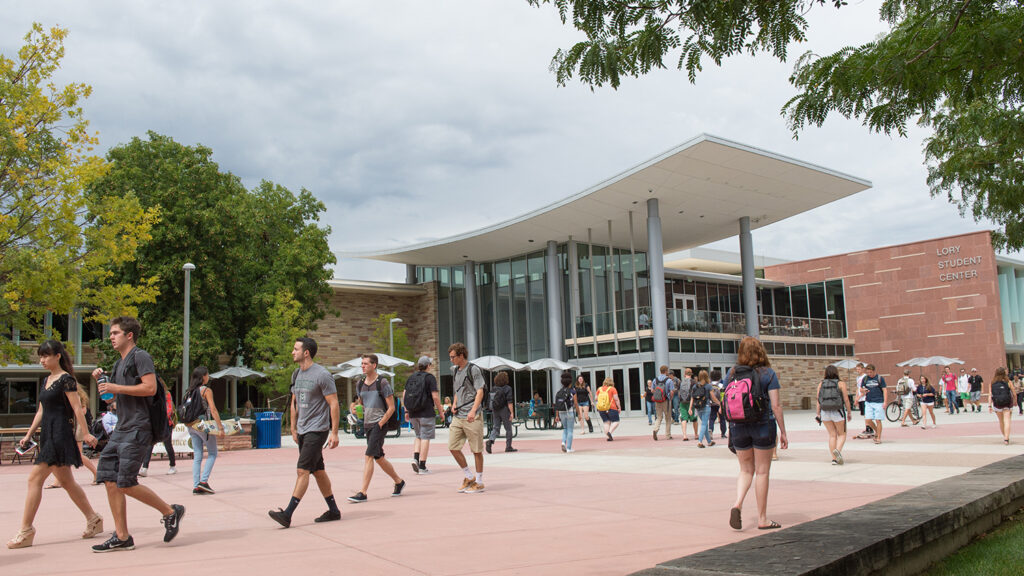
If you plan on transferring to Colorado State University from a community college, you may wonder what’s going to change. Will classes and professors be harder? Will it be difficult to navigate a larger campus? What if you feel unprepared for the move, but not sure why? Let us break it down for you and dispel some of your concerns.
For many students, it’s easier and more financially feasible to start college at a community college, then transfer to a university to finish out your undergraduate degree. But coming to CSU as a community college transfer doesn’t mean you come in unprepared. In fact, community college transfers can have more success than they would have if they’d started as freshmen at CSU. But what’s the same … and what’s different? And what can you expect in the transition?
What stays the same when you transfer from a community college?
- Professors at community colleges and CSU expect the same study habits, time management, personal accountability, and academic integrity.
- FAFSA, Pell Grants, and work-study types of financial aid will still apply when you transfer.
- CSU offers scholarships similar to what you might have seen at your community college, but even more. There are more than 2000 scholarships you can apply for with the one-and-done CSUSA.
- You’ll continue to work with an advisor to ensure you’re on track for your degree, and you’ll still use tools like Navigate to track your own progress to graduation.
- Canvas, CSU’s learning management hub, is user friendly and very similar to MyCourses/D2L, which you will likely already be familiar with. Viewing your syllabus and accessing your course materials will feel very familiar.
- You’ll have clubs, tutoring options, and student success offices that are similar to what you may have experienced, but with added variety and options.
- You’ll probably see people you’ve already met or attending class with … 20-25% of CSU students are transfers!
What’s going to change when you transfer to CSU from a community college?
- Professors will assume you’re ready for advanced analysis and application. Upper-division classes will require more depth and independent learning. You’ll be prepared, but class difficulty might level up.
- Group projects and labs may involve cross-disciplinary or research experiences. CSU has a lot of opportunities for undergraduate research and learning outside the classroom. You’ll get to build your resume, make career connections, and more.
- You’ll get to experience new traditions and make more lifelong memories. There’s so much to do at CSU beyond the academic stuff. Students get into athletic events for free, can participate in week-long activities like Homecoming, and beyond.
- Explore more academic paths, career possibilities, study abroad, and internship options. CSU’s got hundreds of majors and concentrations that allow you to customize your education, dream big, and leave ready to dive into your dream job.
- You’ll have a major-specific academic advisor to help you as you progress toward your degree. But you’ll also be more responsible for checking prerequisites and graduation requirements. Your advisor is here to help you help yourself.
- As a transfer you will be able to apply for transfer-specific housing, where you’ll live on campus with other transfers and get to meet people you can relate to.
What you need to know about your transition
The reason you’re going to college — community college, CSU, or someplace in between — never changes. You’re working hard to grow and learn so you can advance your career, make a bigger impact in the community and the world, and become the best version of yourself. Navigating not just one college, but several means you’ve already done so much work and accomplished more than most. Transferring to CSU isn’t starting over … it’s leveling up.
